
Probate in Howard County Trial Courts
Howard County does not have a separate probate clerk or standalone probate courthouse. Probate matters are handled in the Howard County Circuit and Superior Court system and administered through the Howard County Clerk. The local clerk is Debra C. Stewart, and the clerk's office is the practical records counter for certified copies, non-online estate documents, and wills or guardianship papers that must be checked against the official file.
Common Howard County probate record types include a will filing, probate of will, estate administration, appointment of a personal representative or executor, creditor notice, inventory, accounting, final report, final distribution, guardianship of an adult or minor, small estate affidavit material when filed, and trust-related proceedings filed in court. MyCase may show a public probate docket, but it does not guarantee online access to every petition, will, inventory, order, or accounting.
Source view: the U.S. District Court for the Southern District of Indiana is a federal trial court for Howard County residents, but local probate estates are handled through Howard County courts rather than federal district court.
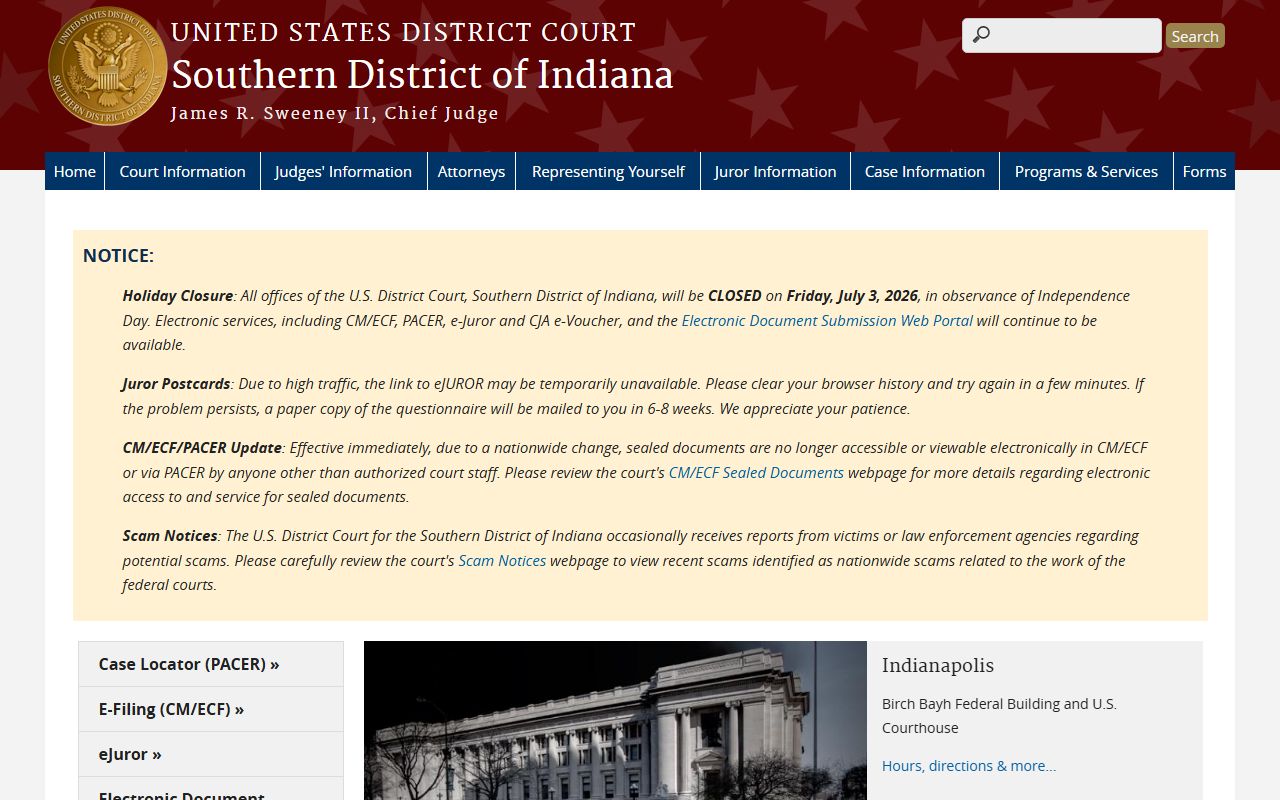
The federal district court image helps separate local probate records from federal civil or criminal filings that would not be held by the Howard County Clerk.
Probate Contact Cards
The clerk is the first contact for probate copies, certification, and questions about whether a will or estate document is available from the public file. If the question is about a scheduled hearing, courtroom assignment, or judicial order, the docketed court may also need to be contacted.
Howard County Clerk
Clerk: Debra C. Stewart
104 N. Buckeye St., Room 202
Kokomo, IN 46901
765-456-2000
Fax: 765-456-2267
Monday-Friday, 8:00 a.m.-4:00 p.m.
Howard Circuit Court
104 N. Buckeye St., Room 310
Kokomo, IN 46901
765-456-2202
Fax: 765-456-2016
Search Probate Records in MyCase
For a public Howard County probate docket, start with Indiana MyCase and search by case number, estate name, decedent name, personal representative, guardian, or party name. Add Howard County and a probate or guardianship case type if the portal offers those filters. When the online docket exists, review the CCS entries for filing date, court, status, hearings, appointment orders, inventory or accounting entries, claims, and closing entries.
| Field label | Required? | Probate use |
|---|---|---|
| Case number | No | Best when an estate or guardianship cause number is known. |
| Name | No | Search decedent, estate, personal representative, petitioner, or guardian names where indexed. |
| County or court | No | Select Howard County to avoid statewide name matches. |
| Case type | No | Use probate, estate, trust, or guardianship filters where available. |
| Date range | No | Helpful for older estates or common surnames. |
| Search or Clear | N/A | Portal controls for running or resetting the search. |
- Search MyCase by cause number if known, or by estate, decedent, or party name.
- Confirm that the case is in Howard County and that the case type is probate, estate, guardianship, or a related civil matter.
- Read the CCS entries for filings, notices, letters, inventory, claims, accounting, hearings, and closing activity.
- Contact the Howard County Clerk if the will, inventory, order, or certified copy is not available online.
Sample Probate Record Inventory
A public MyCase probate record may show the cause number, court, estate or decedent name, filing date, case type, status, personal representative or petitioner, attorney, CCS entries, hearing dates, letters or appointment orders, claims, inventory or final-accounting entries, and public documents if posted. Documents are not guaranteed. Wills, financial account details, medical evidence in guardianships, minor information, and confidential reports may be redacted, restricted, or available only through the clerk with proper authority.
Probate terms: A testator is the person who made a will. An executor or personal representative handles estate administration after appointment. Intestate means the person died without a valid will. A guardianship is a court-supervised arrangement for a minor or incapacitated adult. An inventory lists estate property. An accounting reports estate money received, paid, and distributed.
Probate Filing Fees and Copy Costs
Howard County-specific probate filing fees were not located in the researched clerk page text. The safe route is to confirm the current amount with the Howard County Clerk at 765-456-2000 before filing or mailing payment. The research supports listing the probate fee as a gap rather than guessing from a statewide or third-party table.
| Item | Amount or note |
|---|---|
| Probate or estate filing fee | Fee not located in Howard County official sources reviewed. Confirm with the clerk. |
| Guardianship filing fee | Fee not located in Howard County official sources reviewed. Confirm with the clerk. |
| Certified probate copy | Howard County-specific copy and certification schedule not located in the researched clerk page text. |
| Fee waiver form | The clerk links an official Fee Waiver Form for filing without prepayment if approved. |
| Marriage and driver-record fees | Not probate fees. Do not use them as probate filing amounts. |
Restricted Probate and Guardianship Records
Indiana Access to Court Records Rule 5 controls many exclusions and redactions that affect probate and guardianship files. A public docket may exist while particular documents are not posted online. Adult guardianship medical evidence, minor guardianship details, Social Security numbers, financial account numbers, confidential reports, and sealed filings may be withheld. Adoption records are confidential and not online.
Source view: the U.S. Bankruptcy Court for the Southern District of Indiana handles federal bankruptcy records, which are separate from Howard County probate estates.
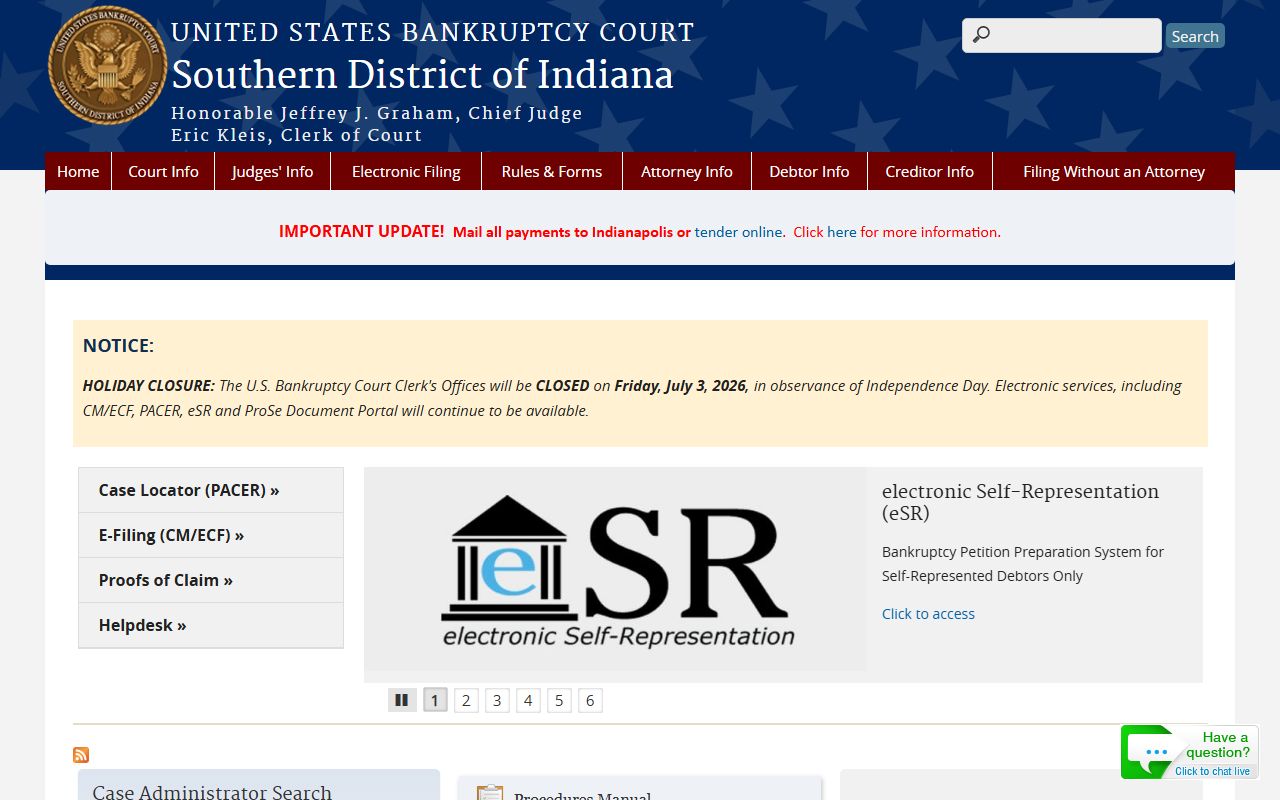
Bankruptcy can affect estate administration, but federal bankruptcy files are not Howard County probate records and are requested through the federal bankruptcy court or PACER.
When Probate Research Touches Federal Records
Most Howard County probate work stays local. Federal systems matter only when a related issue belongs in federal court, such as bankruptcy, a federal civil case, a federal appeal, or federal custody. PACER is the official federal court-record system, and CourtListener may help locate some federal opinions or docket materials without replacing official federal copies.
Source view: the U.S. Court of Appeals for the Seventh Circuit is the federal appellate court for Indiana federal cases.
A federal appeal is not a county probate file, but it can appear in related federal litigation involving estate, bankruptcy, or civil-rights questions.
Source view: PACER is the official registration and access portal for federal court records.
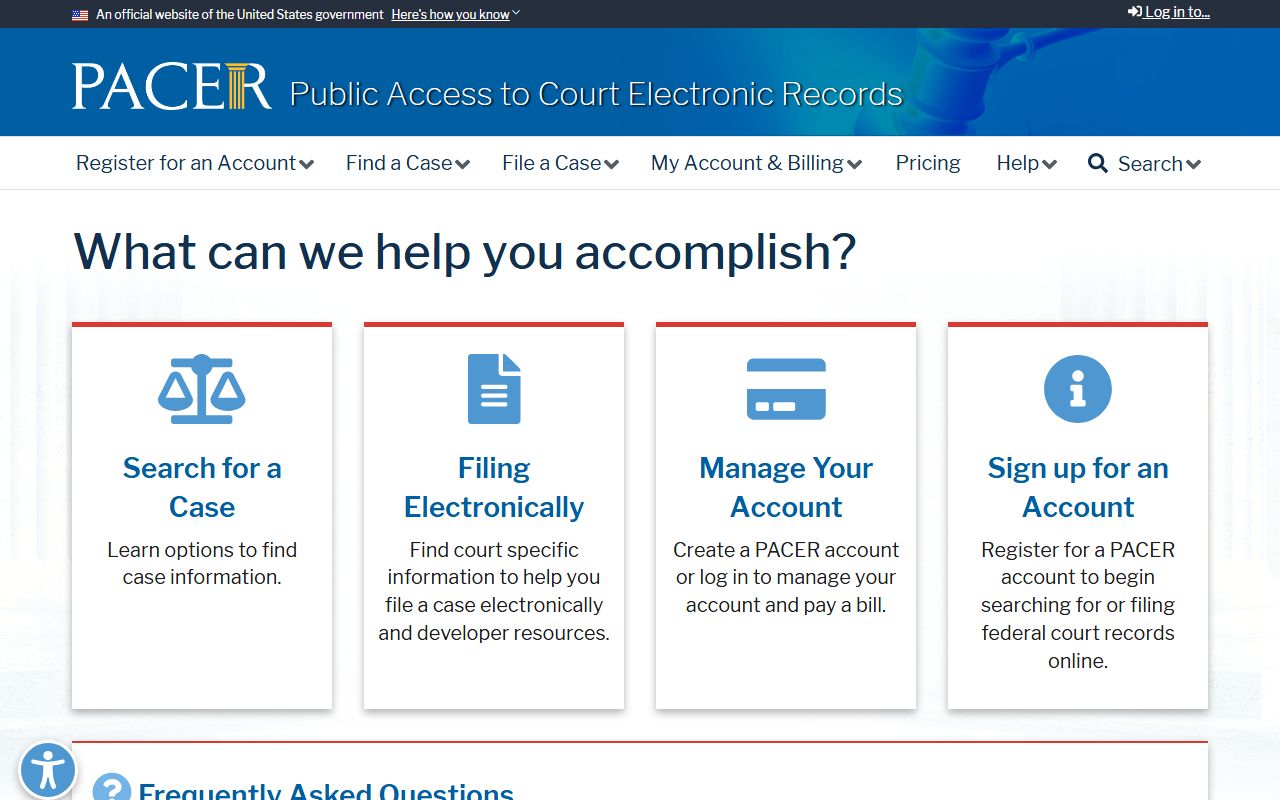
Use PACER for federal cases only. Howard County probate copies, certified estate documents, and wills filed locally still route to the county clerk.
Source view: the Federal Bureau of Prisons inmate locator is a federal custody tool, not a county probate-record source.
Federal custody lookup belongs to criminal or custody research and does not replace estate, guardianship, or will records in Howard County.
Source view: CourtListener provides free federal and state legal opinions and some docket material.
CourtListener can be a research aid, but certified Howard County probate copies come from the clerk or the court maintaining the local file.
Howard County Estate Workflow
A probate search often starts before the court file exists. The first question is whether a formal estate, guardianship, or trust-related case must be filed at all. The research notes that some small estates may use a statutory affidavit process rather than full administration, but the current dollar threshold, waiting period, and form requirements must be checked against current Indiana law and clerk practice before relying on that path. If a formal case is needed, the will or petition is filed through the Howard County Clerk, and the assigned trial court handles appointment, notices, claims, inventories, accountings, hearings, and closing entries.
The public docket is most helpful after the case is opened. Interested persons can look for the filing date, case type, court, personal representative or guardian, attorney, hearing settings, letters, creditor claims, inventory entries, final accounting entries, and closing activity. That still leaves a practical gap: the docket may show that a will, inventory, medical report, or accounting exists without making the document viewable online. For certified letters, certified orders, non-online wills, or estate documents needed for banks, title work, benefits, or transfer steps, the clerk remains the official copy source.
Guardianship records need extra care. An adult guardianship may include medical evidence and capacity findings. A minor guardianship may include identifying information about a child. Access Rule 5 and related court orders can limit public access to those materials while leaving basic docket events visible. A requester who is a party, attorney, guardian, heir, creditor, or other interested person may still need statutory authority, party access, or a court order for documents that the general public cannot view.