
Howard County Criminal Court Records
A criminal court record begins when a prosecutor files a case in the Howard County trial court system. The record is kept as a court file, not as a jail roster entry. It may include the charging information, probable-cause material when public, the initial hearing, bond order, no-contact order, pretrial settings, motions, plea entries, trial events, judgment, sentencing order, probation terms, restitution, and financial activity. The narrower charge issue is covered in the court-charge record, while custody and booking status belong to the jail roster.
Howard County criminal cases are distributed through the Circuit Court and Superior Courts. Superior Court I is the key drug and domestic-violence criminal court and houses Adult Drug Court, Domestic Violence Program, and Re-entry Court. Superior Court III handles many misdemeanors except drug cases, along with traffic infractions and driving offenses. Superior Courts II and IV have general criminal and civil jurisdiction. Circuit Court has general jurisdiction and exclusive juvenile jurisdiction, but juvenile court records have special confidentiality limits.
The Howard County Prosecutor source identifies the official charging office. Source: Howard County Prosecutor.
The prosecutor source connects the criminal court record to the local charging authority rather than to a private background-check file.
Search Howard County Criminal Court Records
Start with Indiana MyCase for public criminal case lookup. Search by defendant name or cause number, then filter for Howard County and criminal case types where available. A case number is the strongest search value. Name searches can return unrelated people, so compare the court, filing date, case type, charges, and party details before drawing a conclusion. A MyCase printout is not the official court record. Official copies come from the Howard County Clerk.
- Open MyCase and select case-number or name search.
- Filter to Howard County and the criminal case type if the portal allows it.
- Open the result that matches the person, court, filing date, and charge details.
- Read the CCS for hearings, filings, plea activity, disposition, sentencing, and payment entries.
- Contact the Howard County Clerk for certified copies or documents that do not appear online.
For the difference between all court record types and the criminal case file, the broader Howard County court records page gives the general public-record framework. Criminal-history products from other agencies are separate from a court case file and should not be treated as substitutes for the docket and filed orders.
The official prosecutor Criminal Division describes review of felony and misdemeanor referrals. Source: Howard County Prosecutor Criminal Division.
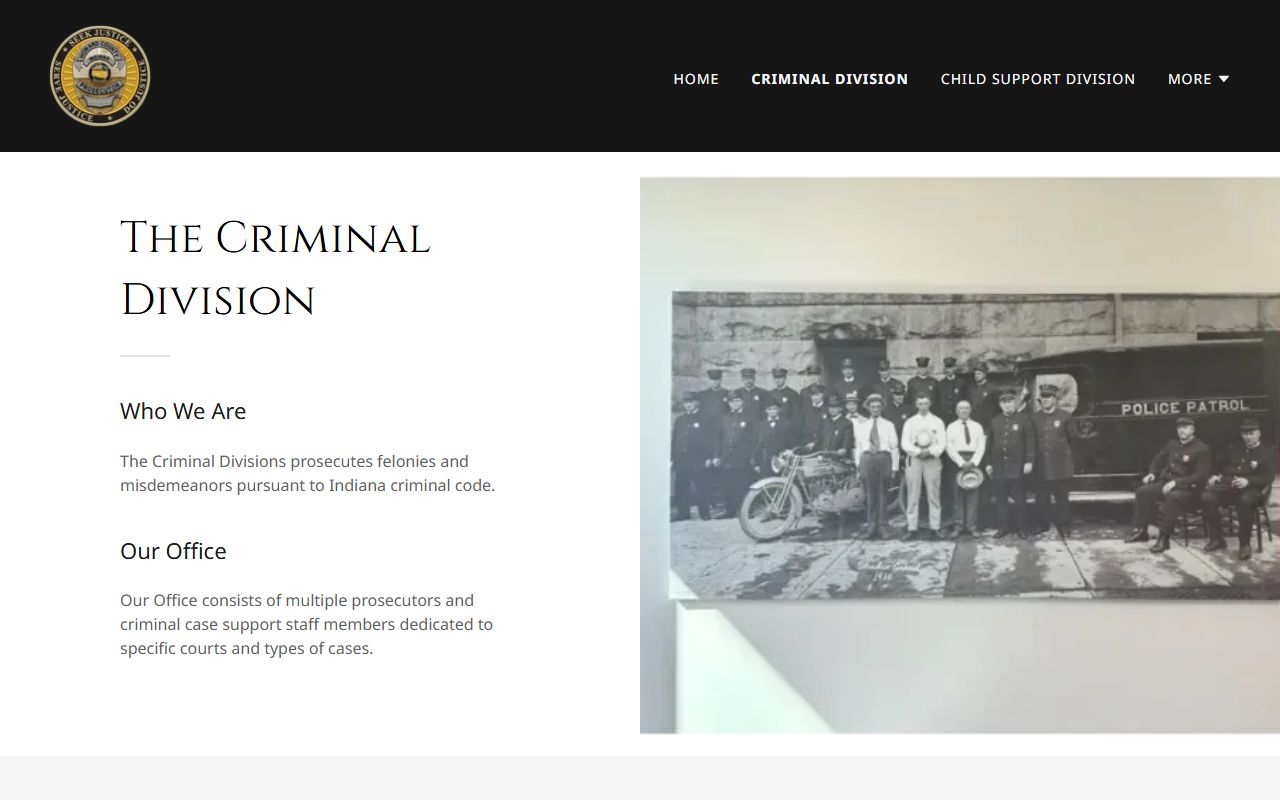
That source explains why a criminal court record starts only after law-enforcement investigation is reviewed and charges are filed.
Howard County Criminal Case Flow
Criminal court records grow in stages. The first public case entries may show the charge filing and initial hearing. Later entries can show discovery issues, bond changes, no-contact orders, continuances, plea negotiations, trial settings, diversion decisions, sentencing, probation, restitution, and closure. The prosecutor represents the State of Indiana in felonies and misdemeanors referred by agencies such as the Howard County Sheriff's Department, Kokomo Police Department, Indiana State Police, DNR, and other agencies for crimes alleged in Howard County.
Case flow: Charges Filed › Initial Hearing / Arraignment › Pretrial and Motions › Plea, Diversion, or Trial › Disposition › Sentencing and Supervision.
| Stage | What the Record May Show |
|---|---|
| Charges filed | Charging information, offense name, level, cause number, filing date, and assigned court. |
| Initial hearing / arraignment | Advice of rights, bond terms, plea entry, counsel status, and next hearing. |
| Pretrial and motions | Appearances, discovery disputes, continuances, suppression motions, orders, and conference settings. |
| Plea, diversion, or trial | Plea agreement, trial setting, verdict, dismissal, or pre-trial diversion status. |
| Disposition | Outcome for each charge, including guilty, dismissed, acquitted, amended, or other recorded result. |
| Sentencing | Jail, prison, probation, fines, costs, restitution, no-contact terms, and supervision conditions. |
Pre-trial Diversion is described by the prosecutor as an agreement that can result in dismissal if completed. Source: Howard County Prosecutor Pre-Trial Diversion.
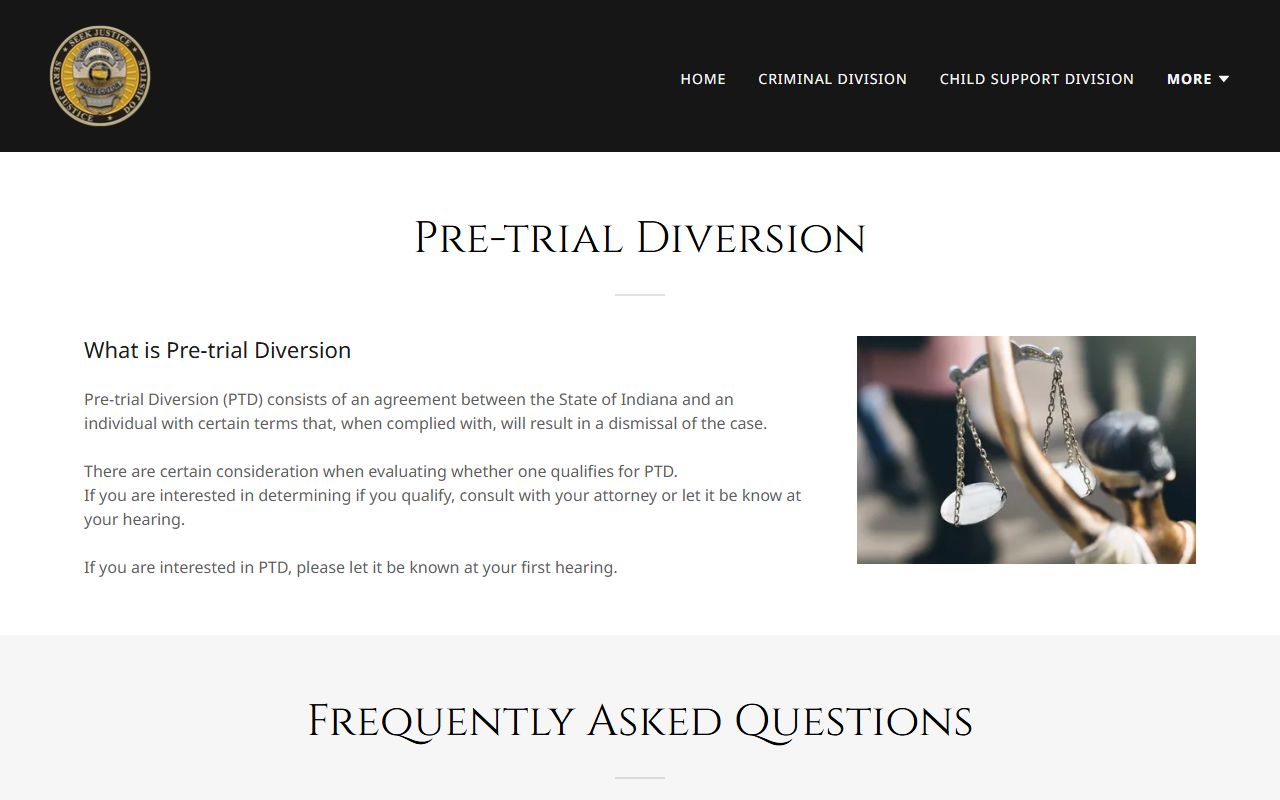
Diversion can affect how a Howard County criminal court record moves from a pending charge to dismissal or further prosecution.
What Howard County Criminal Records Show
The field inventory for a Howard County criminal court record should be read as a case-file map. The cause number links every event to the court record. The court assignment shows where hearings are docketed. Charge fields identify the accusation and current status. CCS entries show the sequence. Disposition and sentencing fields show the result. A single case can contain several charges with different outcomes, so do not reduce a record to the first charge shown.
| Field | What It Shows |
|---|---|
| Cause number | The Indiana case number assigned to the Howard County criminal case. |
| Court | Howard Circuit Court or Superior Court I, II, III, or IV. |
| Defendant | The person charged, with public identifying information limited by access rules. |
| Charges | Offense name, level, filing date, and status for each filed count where public. |
| Attorneys | Prosecutor, private counsel, appointed counsel, or public defender information when public. |
| Hearings | Date, time, room, hearing type, and judicial officer when posted. |
| Plea | Not guilty, guilty, plea agreement, or other plea-related entry. |
| Disposition | Charge outcome, dismissal, conviction, acquittal, amendment, or closure entry. |
| Sentence | Jail, prison, probation, fines, costs, restitution, treatment, or supervision terms. |
| Documents | Public orders and final documents when posted; other documents may require clerk request. |
Charges vs Convictions
The prosecutor's Criminal Division states that defendants are presumed innocent until proven guilty or determined guilty by agreement. That statement matters when reading Howard County criminal court records. A charge is an accusation filed by the State. A conviction is an outcome after a guilty plea, agreement accepted by the court, or trial verdict. A court record may show charges that were amended, reduced, dismissed, or resolved differently from the original filing.
| Point | Charge | Conviction |
|---|---|---|
| Meaning | Formal accusation filed with the court. | Legal finding or accepted plea of guilt. |
| When it appears | Early in the criminal case. | After plea, verdict, or other final outcome. |
| Record risk | May later be dismissed, amended, or reduced. | May lead to sentence, probation, fines, restitution, or collateral effects. |
| How to read it | Check current status and all later CCS entries. | Read the disposition and sentencing order. |
Victim-service materials describe notice of court dates, plea terms, sentencing, and restitution. Source: Howard County Prosecutor Victims page.
Those victim-service details help explain why plea, sentencing, restitution, and cause numbers can appear as key criminal court record fields.
Read Dispositions and Sentences
Disposition reading should be charge by charge. One count may be dismissed while another ends in a guilty plea. A sentence entry may include jail credit, suspended time, probation, community supervision, restitution, fines, court costs, no-contact terms, treatment, or problem-solving court conditions. Community Supervision in Howard County includes Adult Probation, Juvenile Probation, Home Detention, Work Release, Alcohol and Drug Services, Pretrial Services, and Victim Assistance. Those programs may appear in sentencing and supervision entries, but program records can be restricted.
Superior Court I's Adult Drug Court uses a sentencing-withheld model for eligible drug offenders. Participants enter a guilty plea, follow treatment and drug-free requirements, and may have pending charges dismissed if they graduate. Termination can return the person to court for sentencing. Superior Court II's Mental Health Diversion and Veterans Court links are also relevant because diversion or problem-solving court activity can affect how a criminal court record ends.
Note: A dismissal, diversion completion, or amended charge should be read with the full CCS, not as a standalone line.
Sealed vs Expunged Records
Sealed and expunged records are not the same. A sealed record is excluded from public access by law or order. An expungement is a statutory process under Indiana Code 35-38-9 that can restrict public access to eligible arrest, charge, and conviction records. MyCase help notes that pending or denied expungement cases may likely be found, while granted expungements may be removed from public access depending on type. Indiana expungement is not a promise that every agency copy is erased.
| Point | Sealed | Expunged |
|---|---|---|
| Core effect | Record is excluded from public access by rule or court order. | Eligible record access is restricted through a statutory petition. |
| Public MyCase result | May be absent or limited. | May appear while pending or denied; granted matters may be removed depending on type. |
| Who may access | Parties, attorneys, agencies, or others only when law or order allows. | Access depends on the type of expungement and controlling statute. |
| Howard County route | Contact the court or clerk for authority and procedure. | File the petition in court with needed cause, arrest, charge, and disposition details. |
The Indiana Prosecuting Attorneys Council profile confirms Mark A. McCann as Howard County Prosecutor. Source: IPAC Howard County Prosecutor profile.
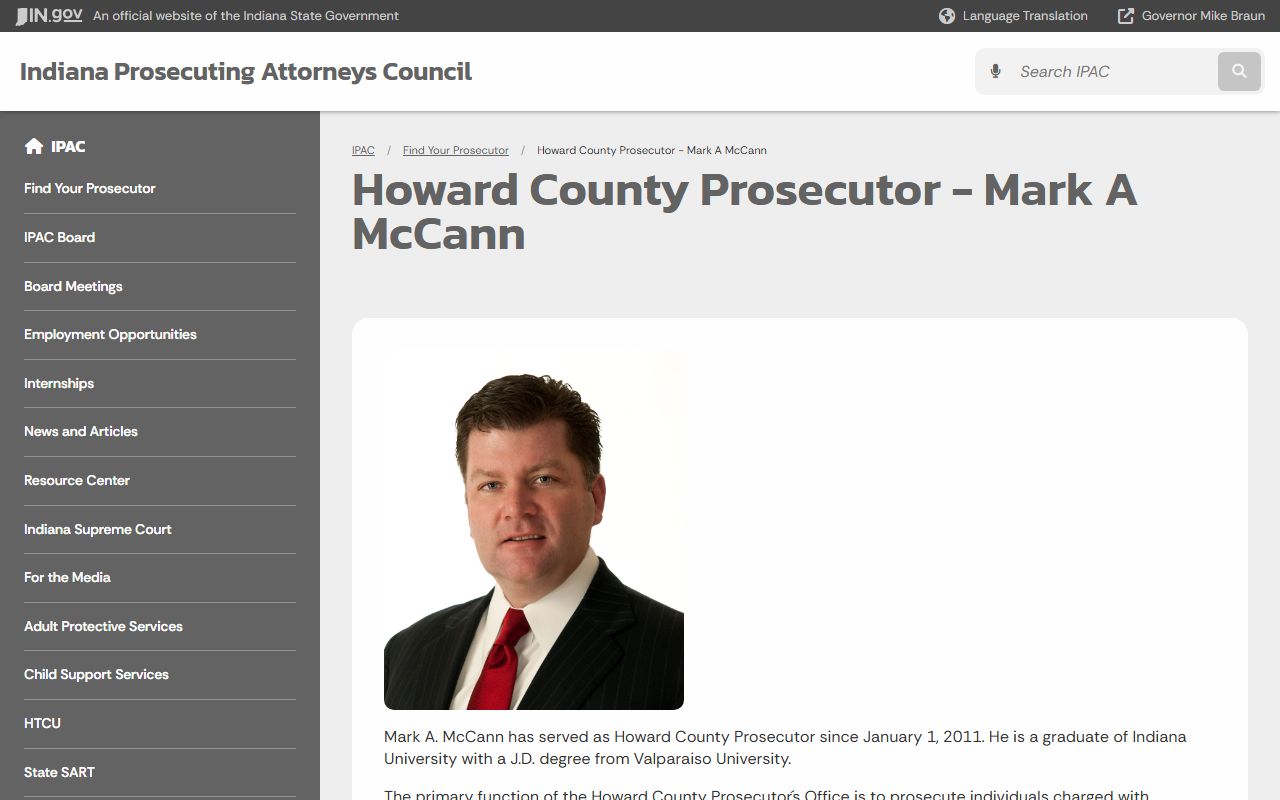
Prosecutor notice and objection can matter in some expungement or criminal-case contexts, so the official prosecutor identity is part of the local record picture.
Public Access to Howard Criminal Records
Howard County criminal court records follow Indiana's court access rules. Access to Court Records Rule 4 sets the baseline that court records are public unless excluded. Rule 5 excludes or redacts confidential, sealed, medical, mental-health, substance-abuse treatment, personal-identifying, investigative, and other protected material. APRA, Indiana Code 5-14-3, supplies the broader public-records framework, while court records use the judicial access rules.
Juvenile records require special caution. Howard Circuit Court has exclusive juvenile jurisdiction, but juvenile delinquency, CHINS, detention, shelter, and many related records are not routine public criminal lookup content. Indiana Code 31-39 governs juvenile law records. Protection orders also have separate online access rules, and MyCase help says protection-order cases are not found on MyCase because protected-person information is excluded from online public access by federal law.
The Indiana State Public Defender has a post-conviction role distinct from local trial counsel. Source: Indiana State Public Defender.
That distinction matters because trial-level appointed counsel in a Howard County criminal case is not the same office as the statewide post-conviction defender.
Howard County Criminal Record Copies
The Howard County Clerk is the local certified-copy and official-record contact. Debra C. Stewart is listed as Howard County Clerk in the state court directory. The office is at 104 N. Buckeye St., Room 202, Kokomo, IN 46901. The phone number is 765-456-2000, and the posted hours are Monday-Friday, 8:00 a.m.-4:00 p.m. For a criminal court record request, provide the cause number if known, the defendant name, approximate filing year, case type, and the specific document needed.
Do not confuse the clerk's criminal case file with a sheriff booking record. The sheriff's current-inmates list shows custody and booking data for people held in jail. The full court case, including plea, disposition, sentence, and judgment, is found in the court record after filing. Active warrant details may involve both sheriff and court channels, but a court warrant is resolved through court action, not by deleting a web listing.